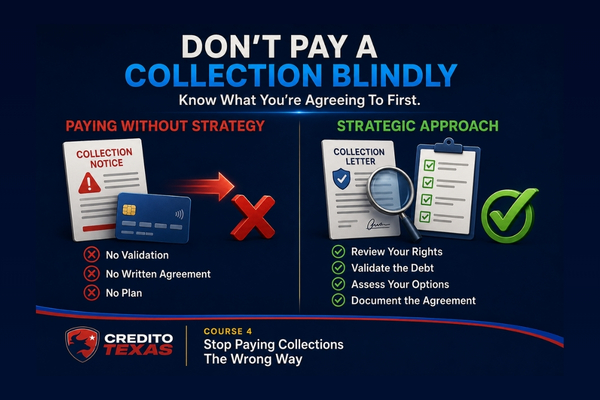
Course 4: Stop Paying Collections the Wrong Way
Course 4
Stop Paying Collections the Wrong Way
If you think paying off a collection account will make it disappear from your credit report — you've been misled. And that misunderstanding could be setting you back more than the debt itself.
Here's the truth that most people discover too late: paying a collection does NOT remove it from your credit report. It simply changes the status from 'unpaid' to 'paid collection.' The negative account can still remain on your report for up to seven years from the date of the original delinquency — even after you've paid it in full.
This is one of the most common and costly mistakes people make when trying to improve their credit. They pay the debt thinking it will help, when in reality the negative mark continues to affect their score.
So what's the right strategy? It depends on the situation. First, verify that the debt is actually yours and that the amount is correct. Under the Fair Debt Collection Practices Act (FDCPA), you have the right to request a debt validation letter from the collection agency before paying anything.
For some accounts, a pay-for-delete negotiation may be possible — this is where you negotiate with the collection agency to remove the account from your credit report in exchange for payment. This must be agreed upon in writing before any payment is made.
For accounts that are older and approaching the seven-year mark, paying may actually restart activity on the account in some cases — which is why strategy matters before action.
The statute of limitations on debt is another important consideration. In Texas, the statute of limitations for most debts is four years, which affects your legal obligation differently than how long it stays on your credit report.
Every collection account is different. The right move depends on the age of the debt, the amount, the creditor and your overall credit profile. Getting personalized guidance before paying a collection can save you money and produce better results.
